Five minutes a day

Swap 5 minutes of scrolling for 5 minutes of Frazzle.

Same phone. Same five minutes on the sofa. But this time you come away with the words for tonight's meltdown, a plan for the battle that keeps coming back, and calmer habits that build up over months.

Free for 14 days. Cancel anytime.

5 minutes of scrolling

Another reel, another tip

  • A clever parenting tip you'll forget by 6pm
  • Someone else's perfect family, someone else's child
  • Nothing ready for the moment it actually kicks off
  • Same fight tomorrow night

You end up where you started.

vs
5 minutes of Frazzle

A plan for your child, tonight

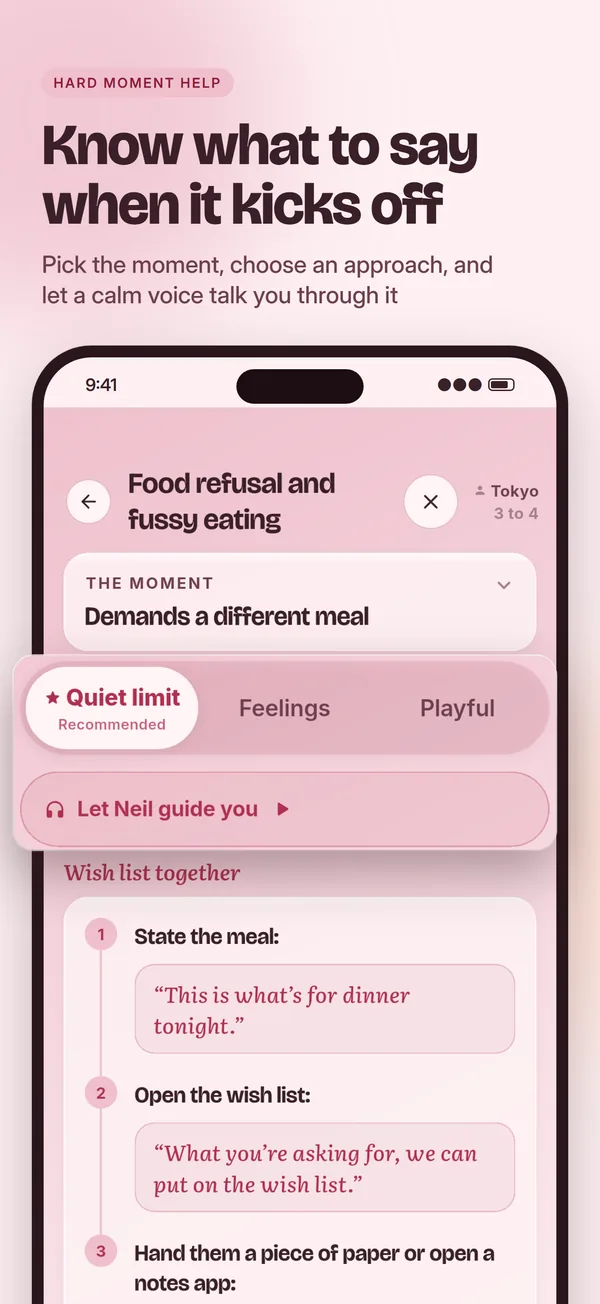
  • The exact words to say when it kicks off, for your child's age
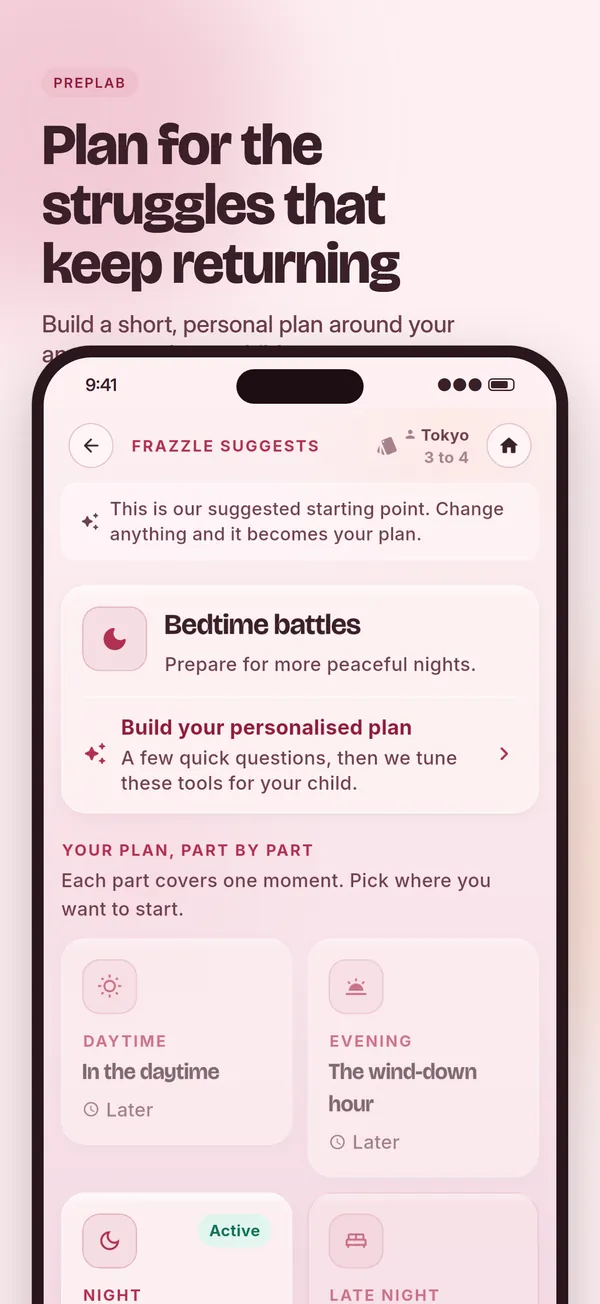
  • A short plan for the battle that keeps coming back
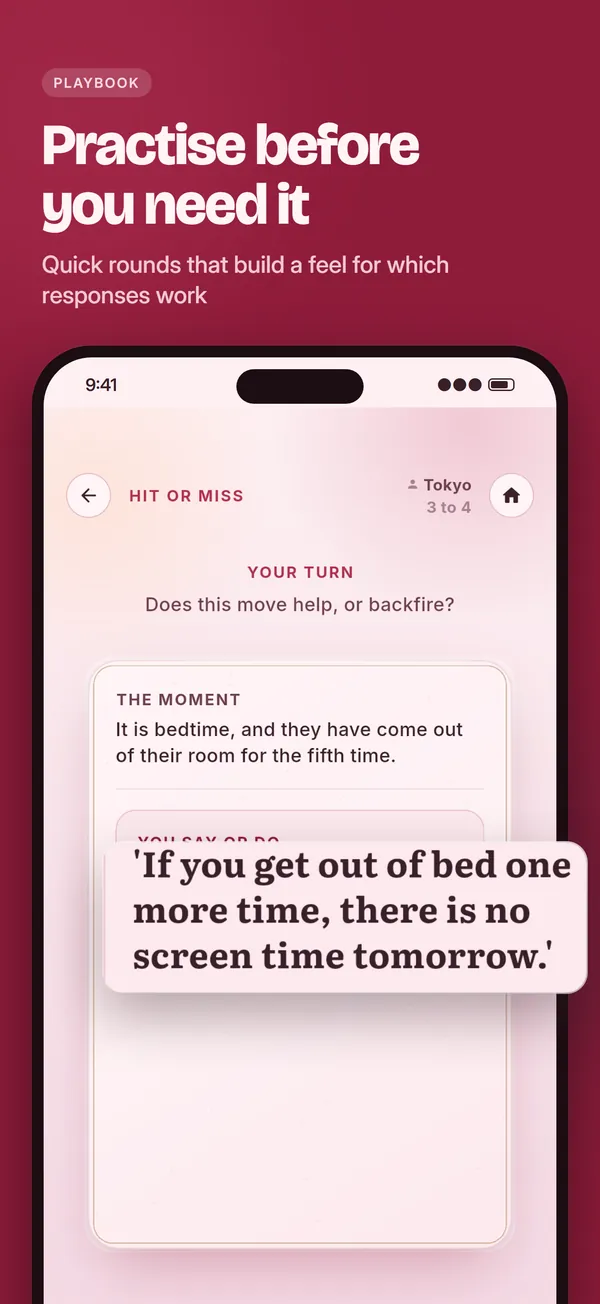
  • A two-minute game that makes the calm response stick
  • A reminder that arrives before the moment, not after

You end up ready.

What fits in five minutes

Pick one. That's your five minutes done.

Everything in Frazzle is built to be short, so it fits in the gaps you already have: the school run, nap time, the minute after bedtime.

The benefits

What five minutes a day can help you work towards

Some benefits show up tonight. Others build slowly, the way any new habit does. Each one is linked to what the parenting research actually found.

TonightShort term

You know what to say

No more freezing or reaching for the first thing that comes out. You've already seen the words, so they're there when you need them.

The researchPractising a response at a calm moment, not in the heat of the moment, is one of the core techniques of the best-tested parent training.StrongKazdin, The Kazdin Method

Fewer repeated orders

Say it once, calmly, with a plan for what happens next, instead of asking louder each time.

The researchRepeating a request over and over makes children less likely to do it, not more. And shouting tends to leave people angrier, not calmer.ModerateKazdin, The Everyday Parenting Toolkit; Webster-Stratton, The Incredible Years

Your calm helps their calm

When you can stay steady, your child has something steady to lean on while the storm passes.

The researchIn a Melbourne study of toddlers aged 18 to 36 months, parents who stayed better regulated had better-regulated toddlers, at every age tested.ModerateEdvoll et al., 2023 (Tuning in to Toddlers)

In a few weeksAs the habit builds

Fewer repeat battles

The fight over bedtime, screens or dinner starts to lose its grip, because you're going in with a plan instead of hoping for the best.

The researchDoing it well on five days beats doing it badly on seven. Small and steady wins over big and patchy.StrongKazdin, The Kazdin Method

The calm response gets easier

At first it feels awkward, like you're reading a script. With practice it starts to come naturally, without having to think.

The researchRepeating a new response strengthens the brain pathways behind it. Like riding a bike, it starts wobbly and gets easier with practice.StrongCampbell & Stauble, Tiny Humans, Big Emotions

Less guilt after a bad day

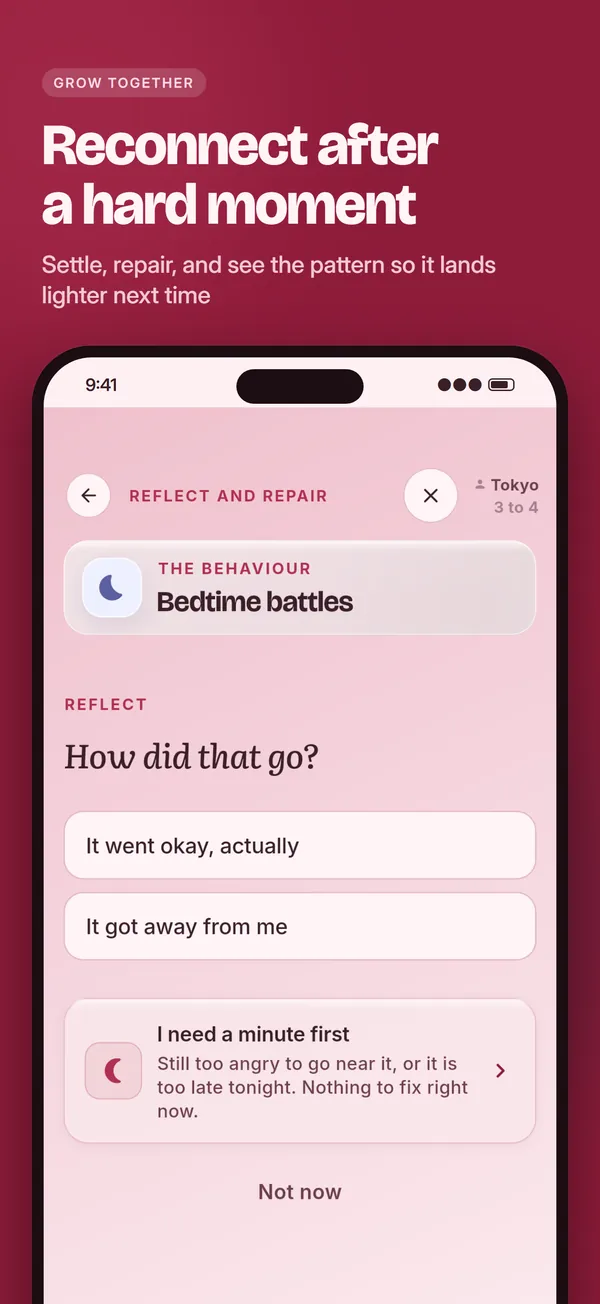
You'll still have rough moments. Everyone does. What changes is that you know how to make up afterwards, and you do.

The researchEven loving parents are only "in sync" with their child about 30% of the time. Making up after the misses is what builds a secure bond.StrongTronick's research, in Harwood, Raising Securely Attached Kids

Over months and yearsLong term

Helping them handle big feelings

When you help your child name and handle big feelings, they slowly learn to do it for themselves.

The researchChildren whose parents helped them understand their feelings did better at school and with friends, had fewer behaviour problems, and recovered from upsets faster.ModerateGottman, Raising an Emotionally Intelligent Child

Warm and firm, together

Warm and firm at the same time. Not too strict, not a pushover. That balance is what Frazzle helps you practise.

The researchChildren of warm parents who also hold clear limits tend to be more cooperative and self-reliant than children of strict or very permissive parents.StrongGottman; Siegel & Bryson, No-Drama Discipline

A closer relationship

A family that can have a hard day and still feel close. That's the real goal, more than any single behaviour.

The researchChanges from parent programmes can last: in a Welsh trial, families' gains were still there 18 months later, with three in four of the most struggling families showing a large improvement.StrongBywater et al., 2009 (The Incredible Years)
Why five minutes works

Small, calm and often beats big and occasional

You don't need an hour a day or a weekend course. The research behind Frazzle points the same way, again and again.

1Practise when it's calm

You can't learn a new response in the middle of a meltdown. You can in five quiet minutes beforehand.

Kazdin, The Kazdin Method
2Little and often

Consistency matters more than intensity. A few minutes most days beats a big effort once in a while.

Kazdin, The Kazdin Method
3Understand the why

Parents who understand why a strategy works use it better. Every Frazzle tool tells you its reason.

Kazdin, Parent Management Training
4Look after you too

Adding support for the parent's own stress made a parenting programme work even better.

Kazdin, Parent Management Training
Informed by tested programmes

Most parents never get to a parenting course. Frazzle brings the ideas to your phone.

The structured parent programmes are some of the best-tested help there is. Frazzle is built on their ideas, delivered five minutes at a time.

16,000+

families across 101 studies of the Triple P programme, with moderate, significant improvements in children's behaviour and parents' confidence.

Meta-analysis reported in Pickering & Sanders, 2015 (by the programme's own researchers)

18 months

later, families in an Incredible Years trial in Wales had kept their gains, with no significant slide back.

Bywater et al., 2009

Self-guided

A do-it-yourself version of a tested programme helped children's behaviour as much as the therapist-supported version.

Kazdin, Parent Management Training

Honest note: these results come from full parenting programmes, not from Frazzle itself. Frazzle uses the same ideas in short daily doses, and we're measuring how well that works now. Frazzle offers general parenting guidance and is not medical advice.
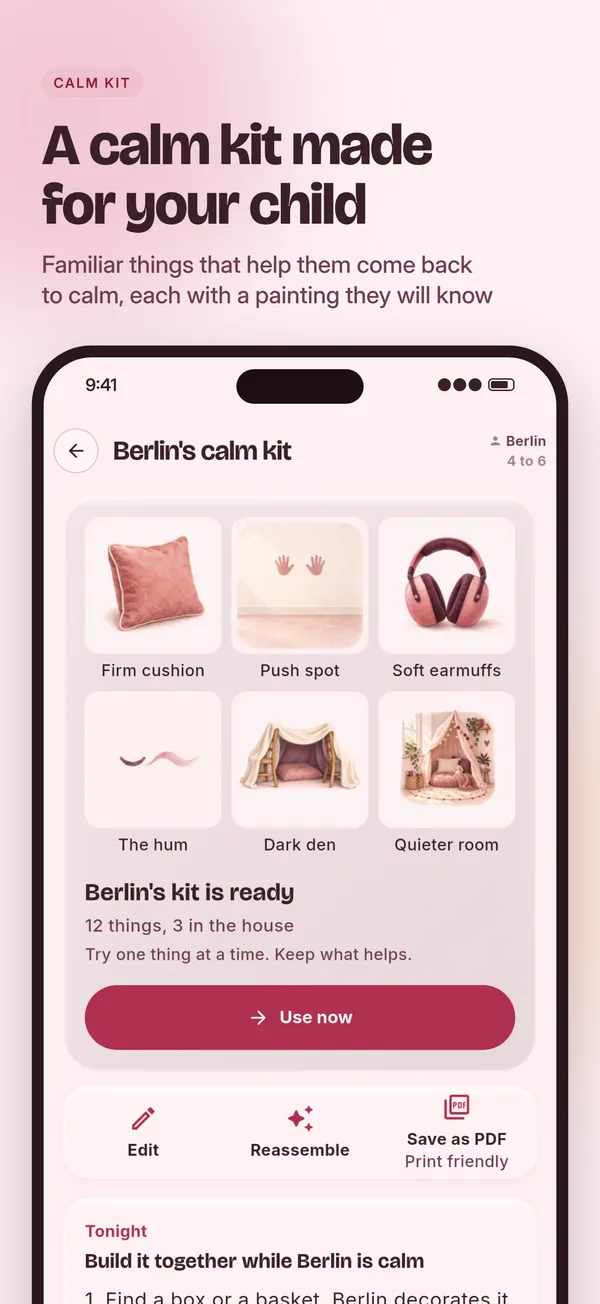
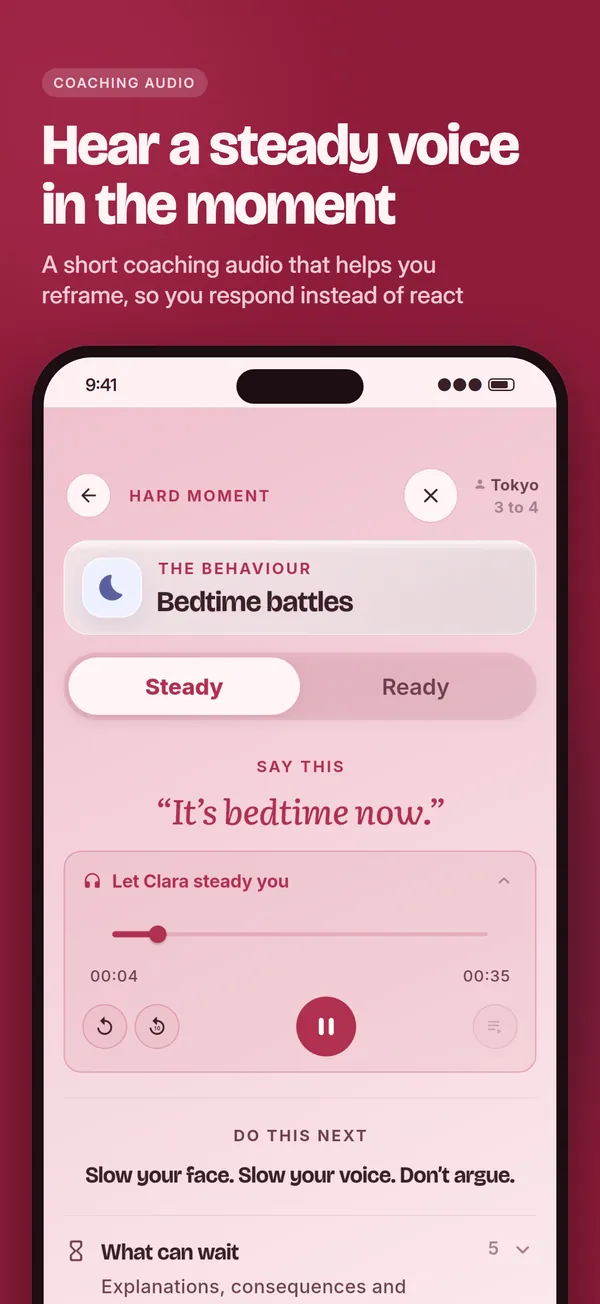
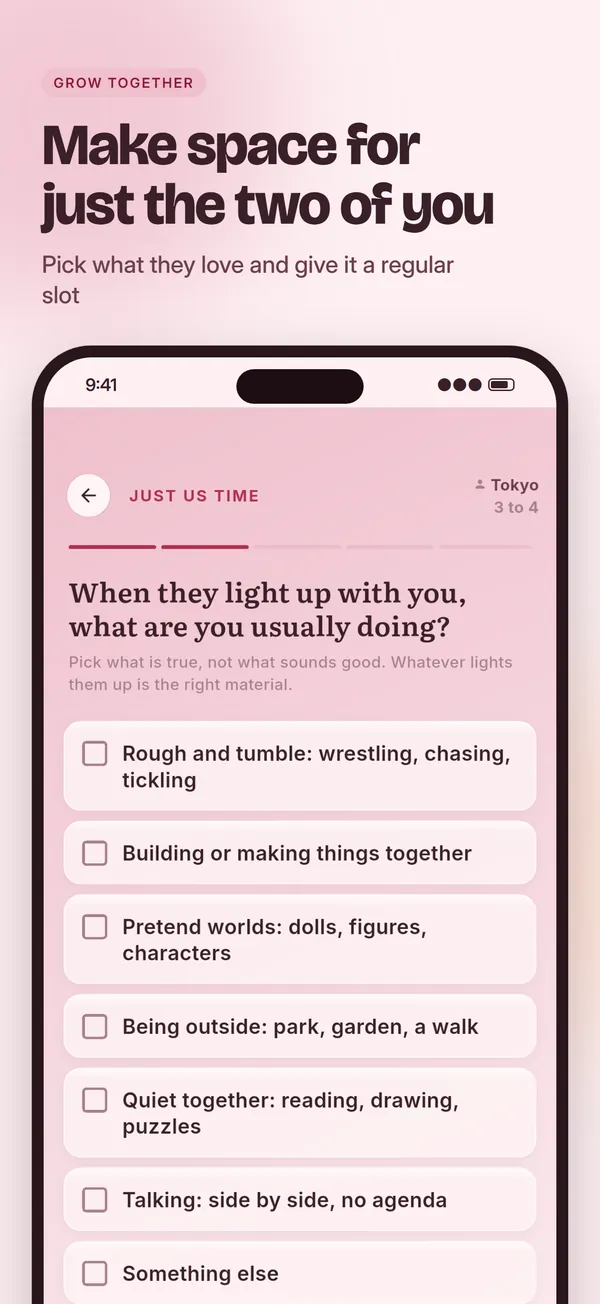
Inside the app

Your five minutes, in pictures

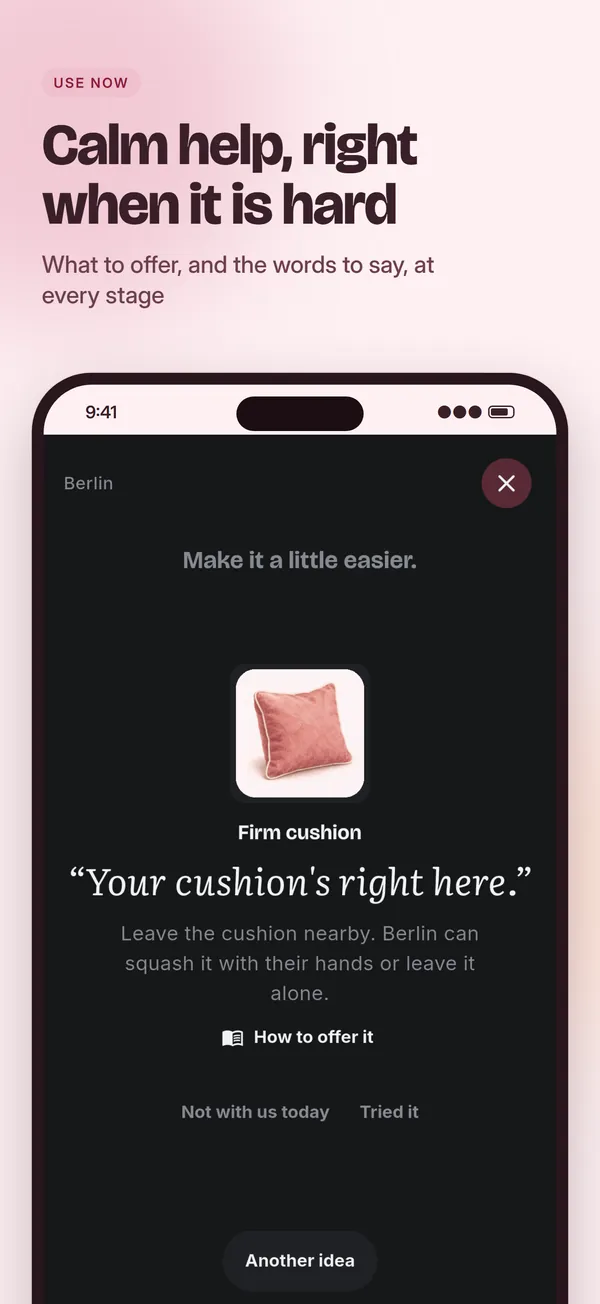
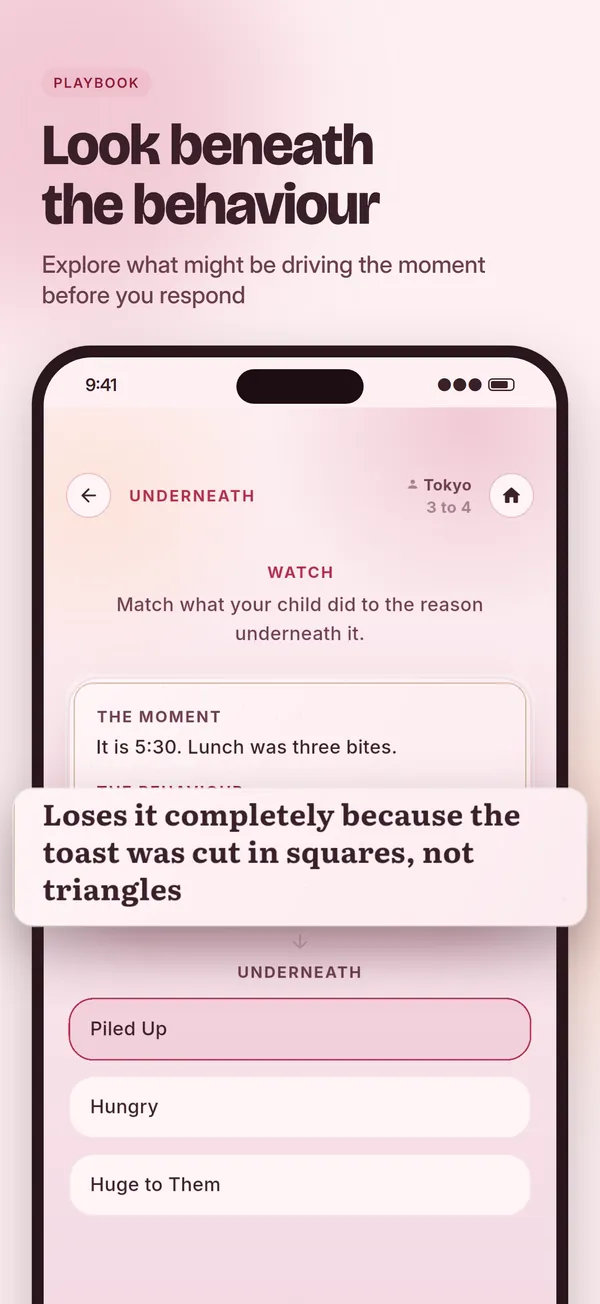
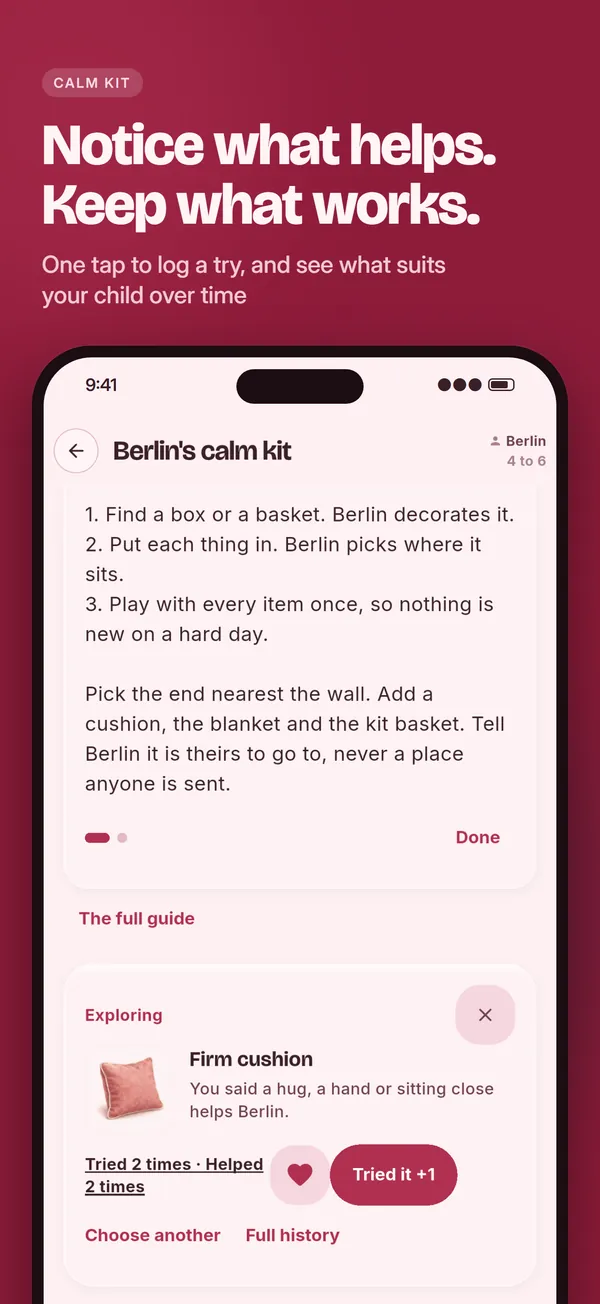
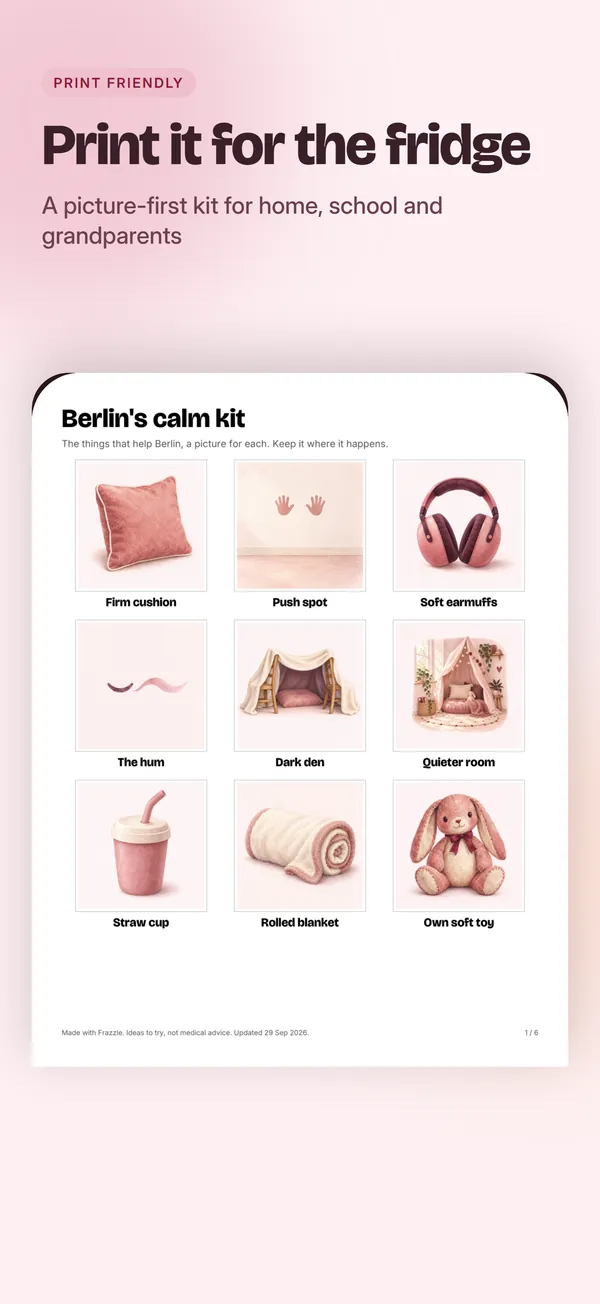
A calm kit made for your child Hear a steady voice in the moment Calm help, right when it is hard Look beneath the behaviour Notice what helps. Keep what works. Print your calm kit for the fridge Make space for just the two of you
Sources

The books and studies behind Frazzle

Frazzle's content draws on 27 parenting books and a set of research studies. These are the main ones behind this page.

The Kazdin MethodAlan E. Kazdin, 2008Practise when calm; consistency over intensity
Parent Management TrainingAlan E. Kazdin, 2005Self-guided programmes; understanding the why
The Everyday Parenting ToolkitAlan E. Kazdin, 2013Why repeating requests backfires
The Incredible YearsCarolyn Webster-Stratton, 1992, revisedCalm, consistent limits; why shouting backfires
Raising an Emotionally Intelligent ChildJohn Gottman with Joan DeClaire, 1997Helping children with their feelings
No-Drama DisciplineDaniel J. Siegel & Tina Payne Bryson, 2014Warmth with clear limits
Raising Securely Attached KidsEli Harwood, 2024Repair after the hard moments
Tiny Humans, Big EmotionsAlyssa Blask Campbell & Lauren Stauble, 2023Practice makes the new response natural
Good InsideBecky Kennedy, 2022Holding limits with warmth
The Explosive ChildRoss W. Greene, 1998, revisedHard behaviour as a skill still growing
Bywater et al., 2009Incredible Years trial, WalesGains held at 18 months
Edvoll et al., 2023Tuning in to Toddlers, MelbourneCalmer parents, calmer toddlers

"Strong" and "Moderate" show how solid each finding is, from replicated trials (strong) to smaller or single-team studies (moderate). We leave out popular claims that haven't held up.

Start tonight

Start with five minutes tonight.

Try everything in Frazzle free for 14 days. For parents of children aged 2 to 9.

No charge for 14 days. Cancel anytime.

Free trial for new subscribers. After 14 days your subscription renews automatically unless you cancel at least 24 hours before the trial ends, in your App Store or Google Play settings.
Start your free trial 14 days free. Cancel anytime.