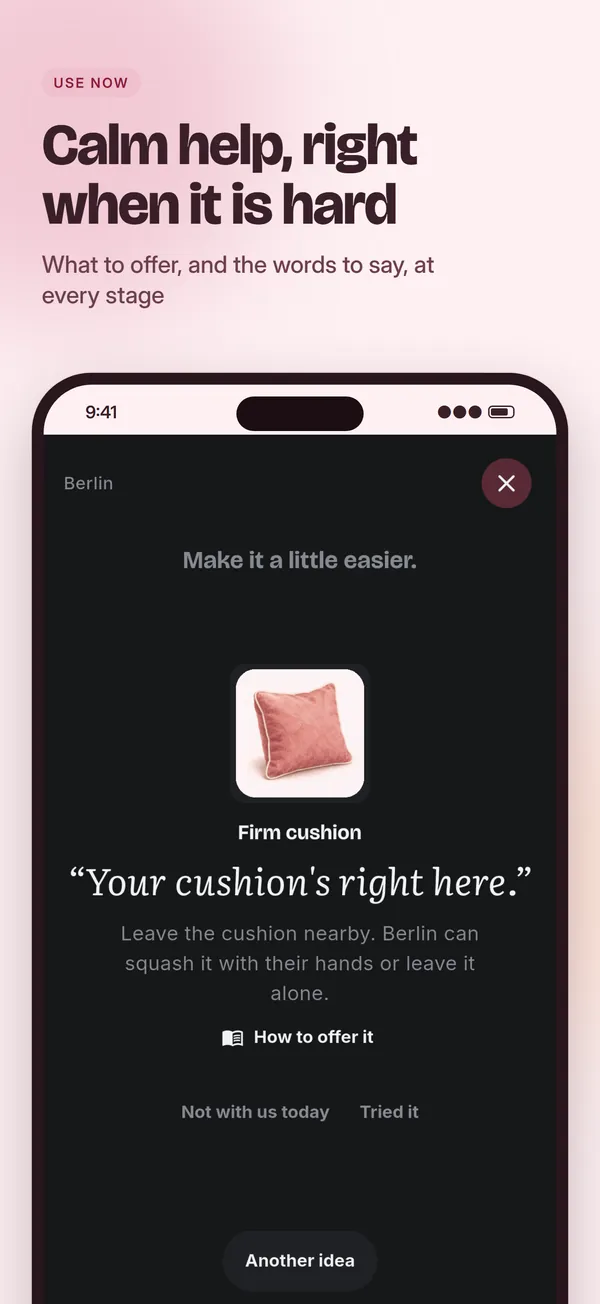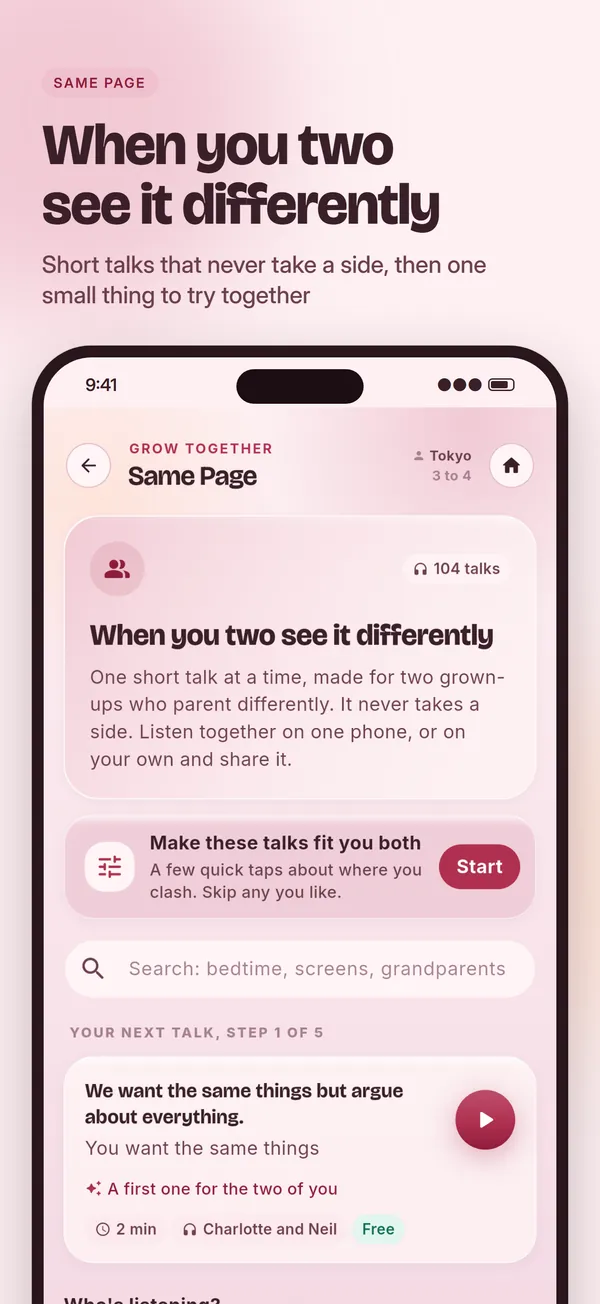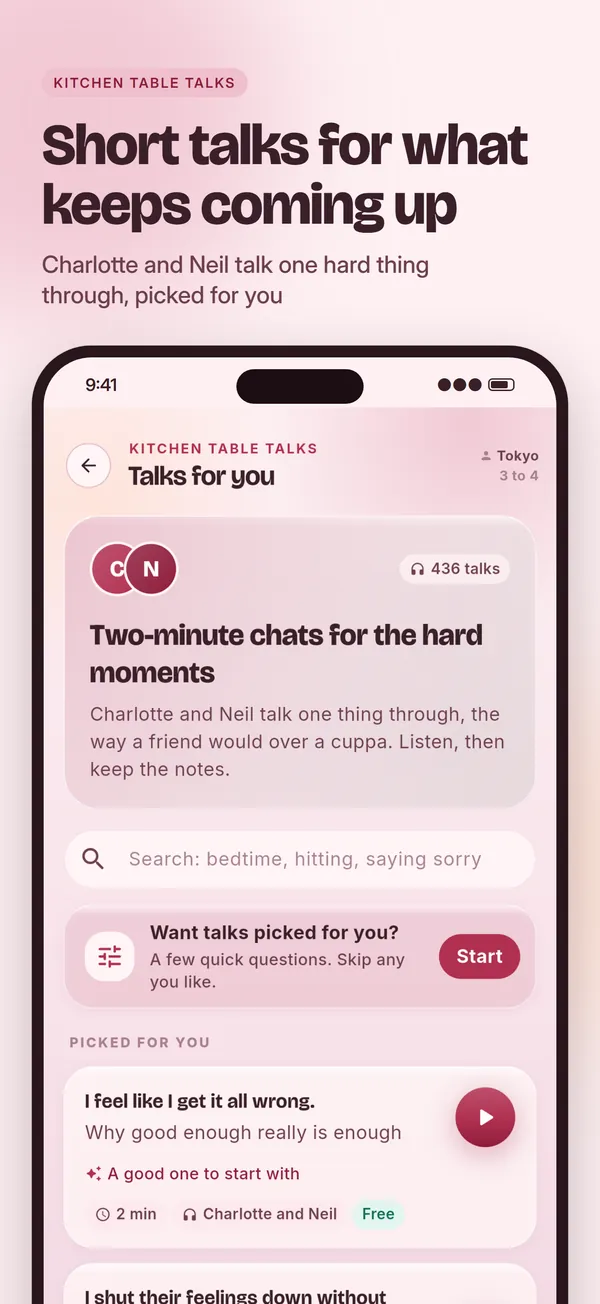
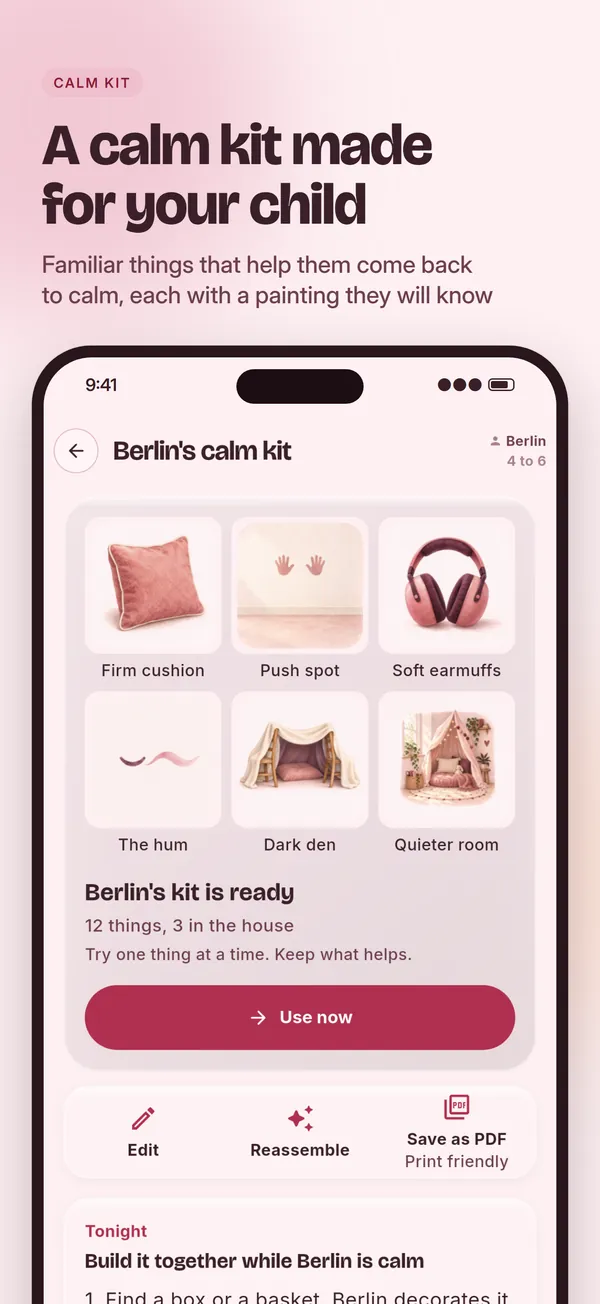
"Feeling overwhelmed by my kids' huge reactions and big emotions?"

Is that you? Frazzle can help.

Know what to do. Practise it before you need it.

Not advice you read. A response you can reach for.

Live beta on iPhone and Android Free during beta For ages 2 to 9
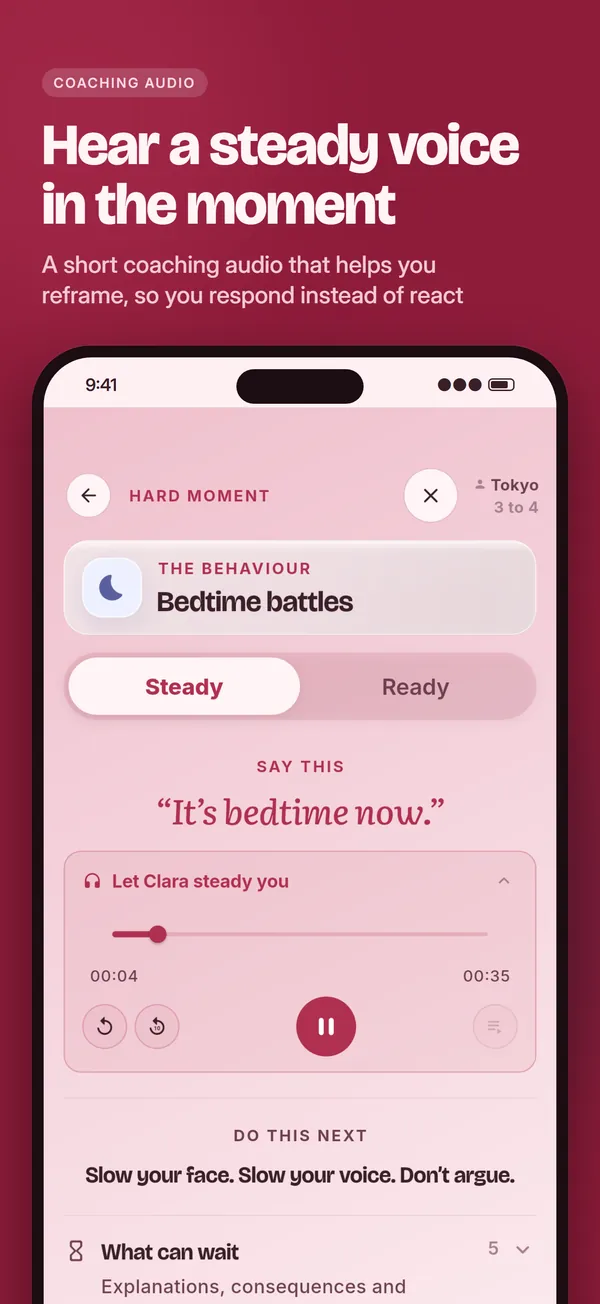
Frazzle Steady screen: one line to say, I hear you the answer is still the same, with a Let Clara steady you button and a body cue to breathe out and lower your voice

Prepare, steady, reframe: a line to hold onto, a calm voice (Clara), and one thing to do with your body.

What frazzle-free means

Becoming frazzle-free isn't about eliminating meltdowns or difficult behaviour. It's about changing what happens inside you when those moments arrive: easing the moment, feeling more confident facing it, and reducing how often it happens over time.

The gap

Knowing isn't doing.

You have read the books and followed the psychologists. The breakdown was never knowledge. It is the three seconds between knowing the calm response and producing it at 6pm, when you are depleted and it is all going off at once. You cannot read your way into changing how you react.

66%
want help staying calmer in the hard moment
55%
don't know what to say when it is actually happening
60%
named their own reaction as the hardest part

We know the gap is real because parents told us. 90 parents signed up for the beta and we asked one open question: what is your hardest parenting moment? 83 percent answered, which tells you something on its own.

Where parents go today

Everyone stops at knowledge.

Millions of parents are asking. Nothing carries them from knowing to doing.

Instagram and TikTok

You leave a comment on a psychologist's reel, get a toolkit PDF, and read it once.

Reddit and Goodreads

Active communities discuss tantrums and boundaries every week. Lots of questions, the same answers, no skill built.

Parenting books

Kennedy, Siegel, Lansbury. Widely read and deeply valued. But a book cannot rehearse a response with you.

Chatbots

Instant, personalised answers. But a chatbot cannot train your reflexes for 6pm.

Every channel stops at knowledge. Frazzle carries you from awareness, through rehearsal, to instinct.

The solution

An implementation system, not more advice.

Frazzle turns parenting research, skill building and habit science into words you can actually say, plans you rehearse while calm, and calmer instincts that show up when it counts.

1

Awareness

You know calm parenting exists. Reels, podcasts, the books on the shelf.

2

Knowledge

You know what to do: the approach, the words, the boundary.

Books and apps stop here
3

Rehearsal

You have made it yours: planned it, rehearsed it, adapted it to your child.

Frazzle
4

Instinct

The calmer response starts to show up on its own. That is what the practice trains toward.

Frazzle
In your day

Meet the moment where you are.

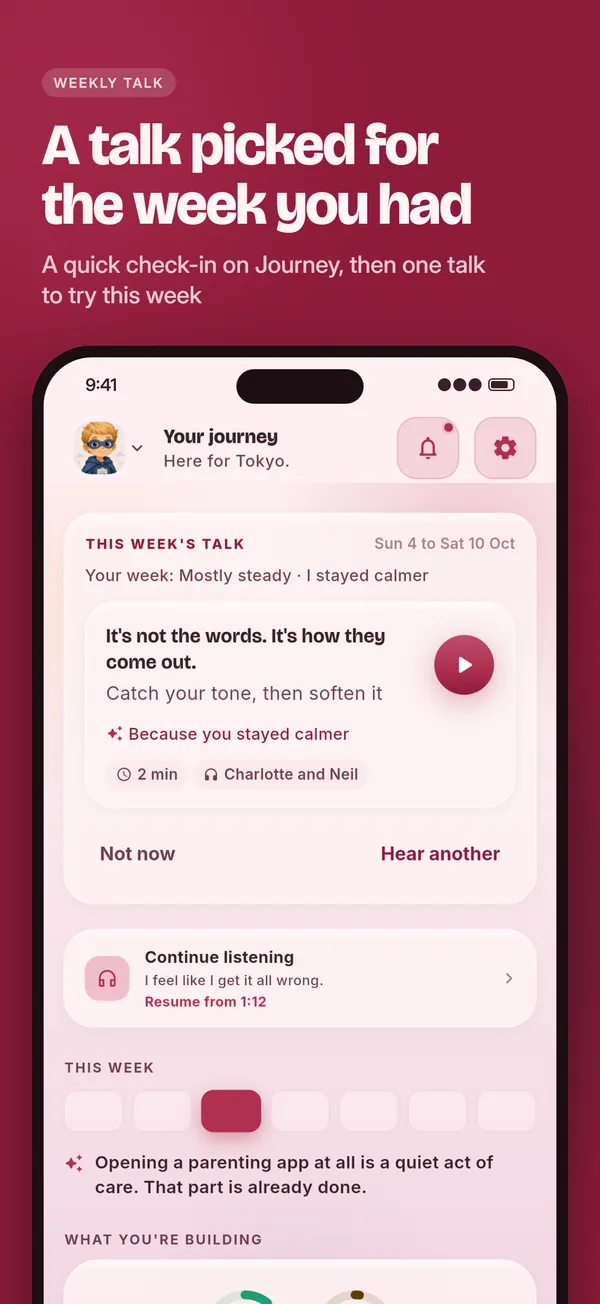
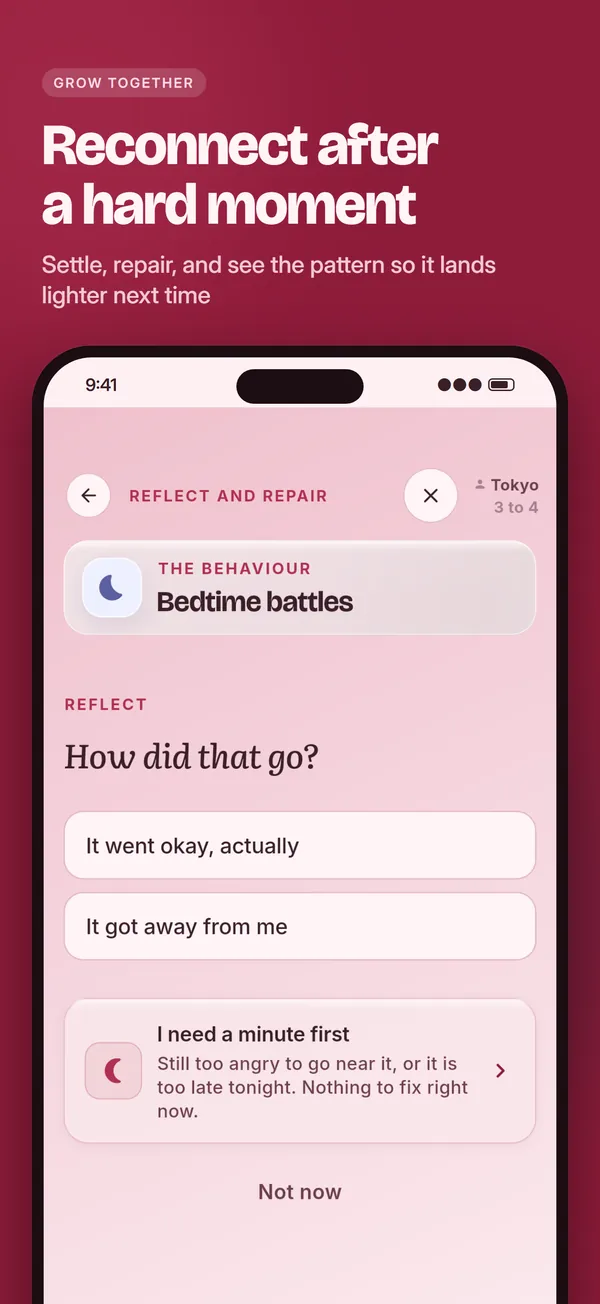
Steady while it is happening, Ready before you go back in, Reflect after it is over, and reminders so the plan shows up on the evening it is for. A calm voice, Clara, can talk you through it hands free.

Frazzle Home in dark mode showing Your focus, keep screen ending support close, with a Quick Guide and Plan, and Hard Moments and PrepLab below
A home tuned to your childYour focus, your best next step, and a quick way in when it is kicking off.
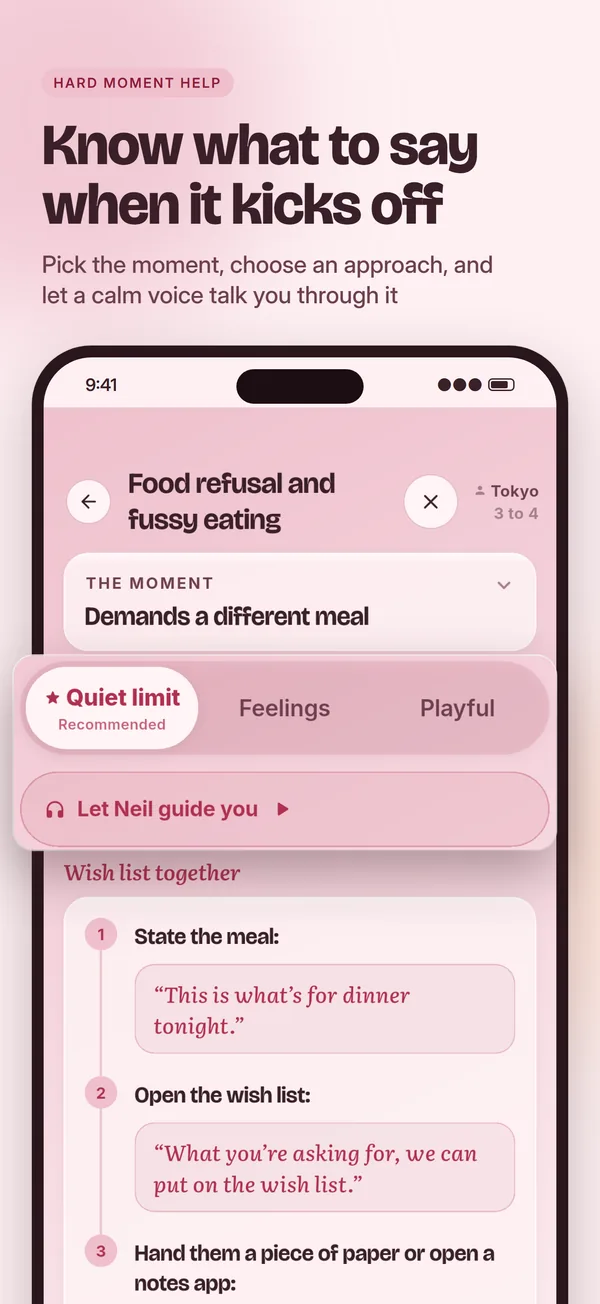
Hard Moment for food refusal in dark mode, on the Ready tab, asking which one fits with eight situations
Every hard moment, one search awayFood refusal alone can mean many different things. Pick the exact situation, get the moves with the words, steady yourself, or reflect afterwards.
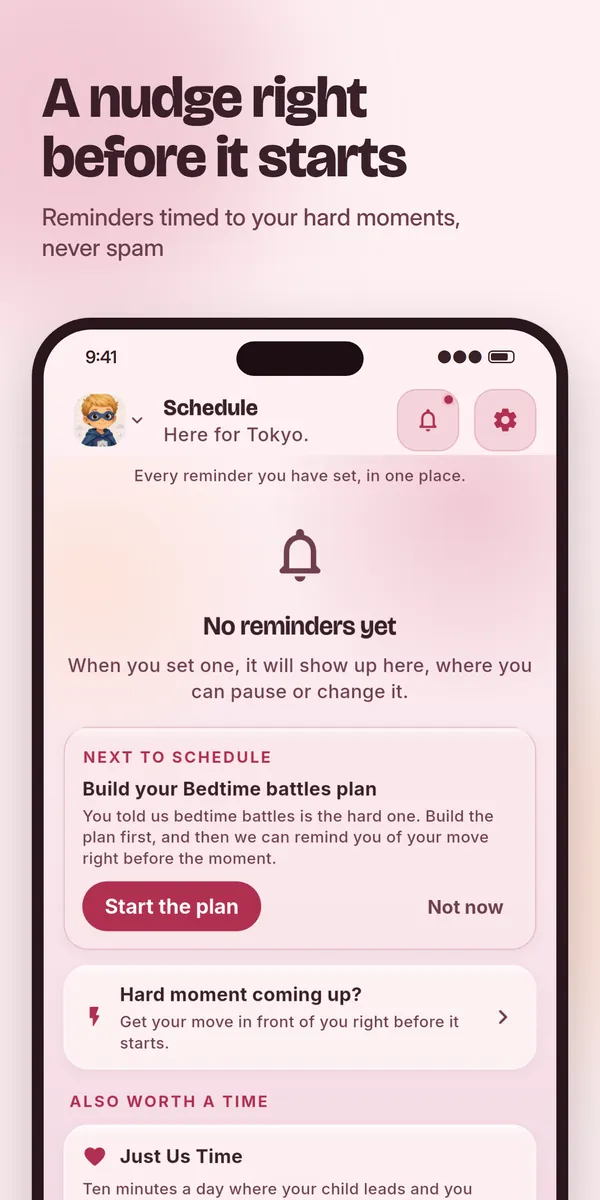
Schedule tab in dark mode, every reminder in one place, with next up Reflect and Repair and a Just Us Time suggestion
There when it kicks offYour move arrives before the moment, not the morning after. Non-pushy by design.
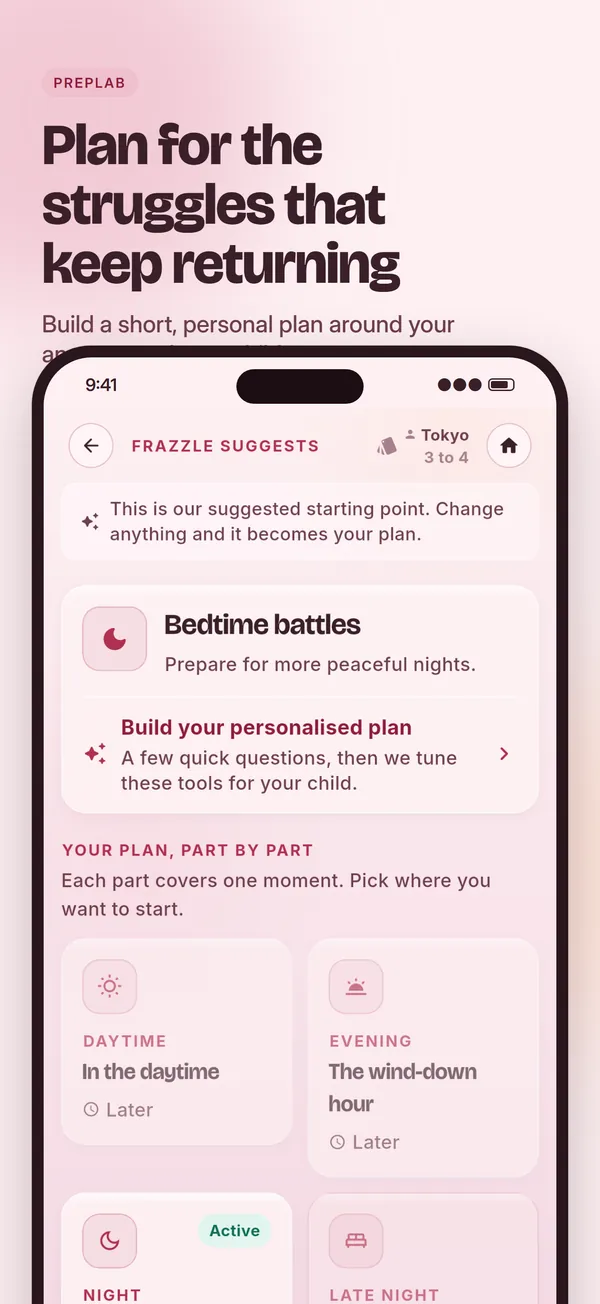
PrepLab

Plan for the battles that keep coming back.

"Pushing food teaches resistance, not eating."

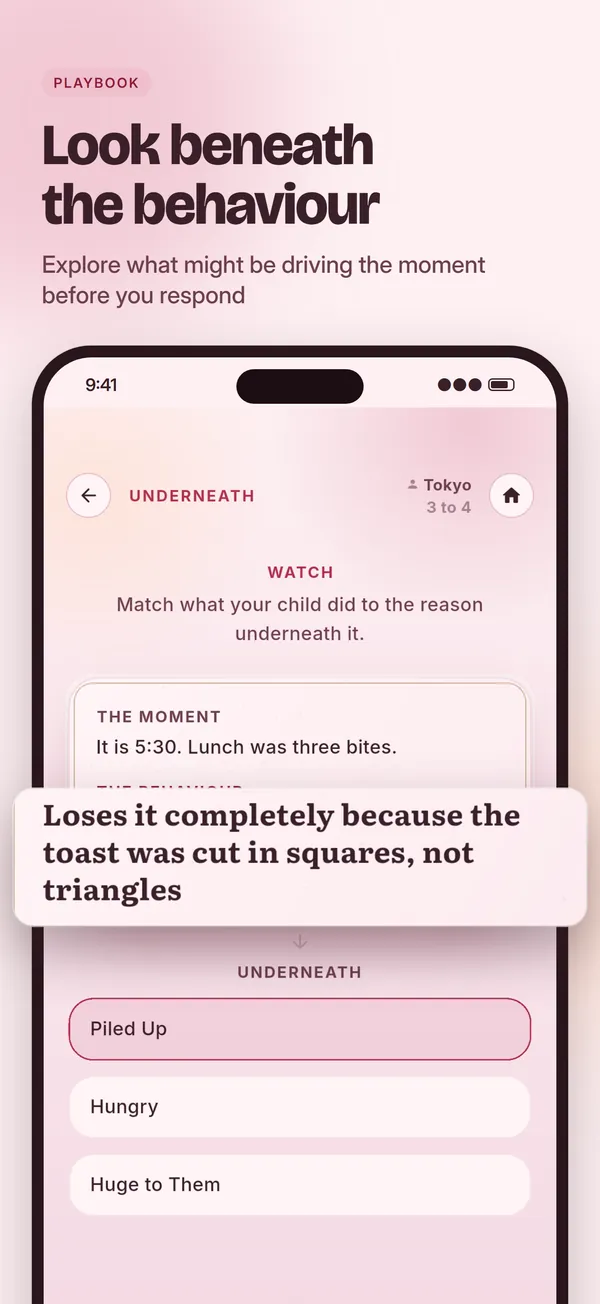
Most hard moments repeat. PrepLab starts with the pattern underneath the battle, then builds a plan around your actual evening. For food refusal, that might be involving them in preparing the meal so they feel ownership, rather than pressuring them or handing over a screen.

  • Every tool carries its own reason, so the plan becomes yours
  • One part opens at a time, so it never overwhelms
  • "Make it instinct" turns your lead move into a reflex
PrepLab food refusal screen showing the pattern, pushing food teaches resistance not eating, and a ready to build your plan button
Tune your board question asking what you tend to do when mealtimes get to you, with no judgement
Tuned to you, not just your child"No judgement. This tells us which support to put in your corner."
A plan board for setting the meal up with core moves and make it instinct and remind me buttons
Your plan, one part at a timeCore moves you can reorder, swap out, or switch off entirely.
Reminder sheet, when should this reminder arrive, before the moment and repeats, 7pm on weekdays
It arrives before you need itSet it for 7pm on weekdays and your move turns up ready in your head.
Parent Mastery

Where knowing becomes instinct.

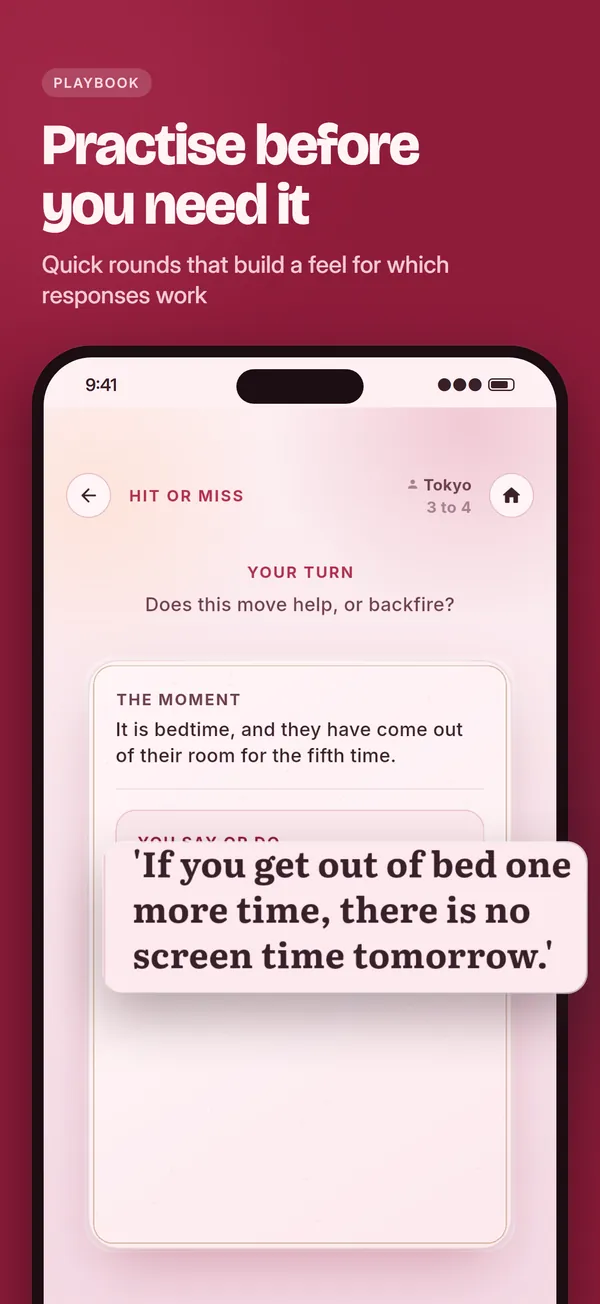
The moment you build a plan, your old default is still faster. So you rehearse. Five short games you play in the two spare minutes you actually have, built on the same habit science that builds any skill: retrieval practice, spaced repetition, and identity-based habits. All from your own scenarios, tuned to your child.

Spot the PullCalm lines and bait look the same for a second. Tap the calm ones; when it is bait, hold still. You practise catching the pull in the half-second before you react, while the snap is still yours to stop.
Spot the Pull game explainer in dark mode: tap the calm lines, hold still on the bait, practise catching it in the half-second before you react
How it works
Spot the Pull gameplay: a bait line, if you get out of bed one more time there are no stories tomorrow, with a breathe out prompt
In play
The WindowSlide each move to when you would actually make it. Too early and it wears off, too late and it has already blown up. The right idea at the wrong moment is the one that seems not to work, so you practise the timing.
The Window game explainer in dark mode: slide the card to when you would do it, you practise the timing
How it works
The Window gameplay: place the move have the talk that solves it on a timing axis, from during the blow-up to a calm moment between
In play
Spot the Pull

Catch the pull before you react.

The Window

Get the timing of your move right.

The Other Side

See the moment from your child's side, not what you assume as an adult.

Underneath

Read the driver: tired, overloaded, can't cope, not "being difficult."

Judge the Move

Call a real response, good move or miss, and build the split-second read.

Personalised, on your phone

It learns your child, and your week.

Everything is tuned to your family, and the matching happens on your device. The content is generic; the fit to your child is what makes it feel like it is about your kid.

What it reads

Your child, you, the moment, and your week.

Your child's temperament (intense or mild, sensitive or resilient, slow to warm or quick to engage). What you tend to do under stress (give in, go sharp, freeze, over-explain). The situation (a transition, a limit, tiredness, sibling friction). And what you have already tried, practised, and scheduled.

What it changes

The move, worded for your house.

Which words to reach for and the tone, the body cue, how to word the limit, the prevention step, the repair line, and which skill to practise next. If your child runs intense, it trims the words and leads with co-regulation. If you tend to give in, it helps you set the limit before the moment and hands you the line: "I hear you. The answer is still no."

Private by design. Your child's profile and answers never leave the phone. The personalising runs on device, so no child data sits on our servers and no personal data is needed.

Early traction

Ten weeks of beta. Real signal.

Still early. The counts are small and will keep moving, so the signal that matters is the shape of it, not the number.

Still growing

Sign-ups keep climbing, entirely through word of mouth, with no paid acquisition.

Used more than once

Parents come back and use it again rather than opening it once. That is the signal that matters most this early.

14 countries

Early, and already being used by parents around the world.

Built with parents. Scheduling plans and getting timely reminders came from parents. The idea: let it exist, then make it better.

The research

Grounded in the research parents don't have time to read.

Frazzle sits on two bodies of work that rarely meet in one product.

How children work

The clinically trialled parent-training programmes: Alan Kazdin's work, Carolyn Webster-Stratton's Incredible Years, PCIT, and Triple P. Plus the wider canon on attachment and emotion: Siegel, Shanker, Gottman, Kennedy, and Lansbury.

How adults change

Habit and learning science: retrieval practice, spaced repetition, and identity-based habits, drawn from Atomic Habits, Make It Stick, and Tiny Habits. Because knowing has never been the hard part.

No-Drama Discipline The Whole-Brain Child Good Inside The Explosive Child The Incredible Years Raising an Emotionally Intelligent Child No Bad Kids Raising Securely Attached Kids The Everyday Parenting Toolkit How to Talk so Little Kids Will Listen

We say grounded, not proven. The programmes at Frazzle's core carry decades of clinical evidence. Delivering them as rehearsal and practice on your phone is exactly what this beta exists to test.

Join the beta

Know what to do. Practise it before you need it.

"Feeling overwhelmed by my kids' huge reactions and big emotions?" That is exactly who this is for.

For parents of children aged 2 to 9, in the meltdown years. Live on iPhone and Android, free while in beta, and shaped by your feedback.

Free during beta · For ages 2 to 9 · Ten weeks of building with real parents, across 14 countries

QR code that opens the Frazzle beta signup form
Scan to joinOpens the signup form
tally.so/r/7RE919